

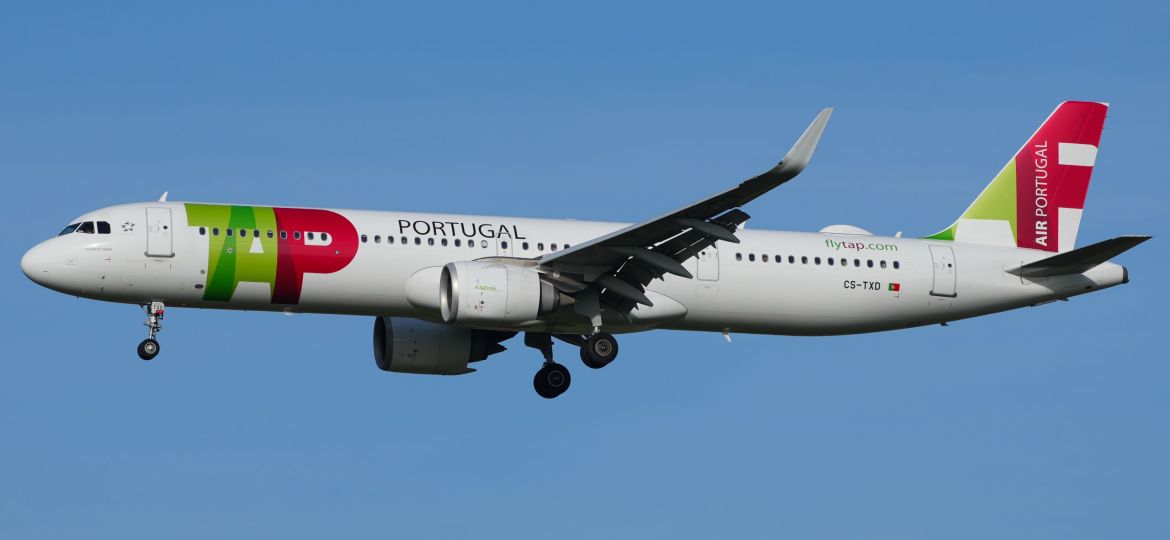
The company is using new painting technology on its aircraft.
The implementation of a lighter base coating technology in the company’s fleet should allow TAP Air Portugal to save approximately 428 tons of fuel and reduce CO2 emissions by approximately 1,353 tons per year.
TAP Air Portugal has successfully completed operational tests of a lighter basecoat technology for aircraft, capable of reducing weight by up to 26 kg per aircraft, reinforcing the company’s ongoing commitment to operational efficiency, fuel savings and emissions reduction.
Tests conducted with AkzoNobel Aerospace Coatings’ Aerobase UPD formulation demonstrated that the system can reduce the overall thickness of the basecoat film by 36%, compared to the traditional two-layer application process, while maintaining the durability, appearance, and finish quality standards required in commercial aviation operations.
Field tests conducted on a TAP Air Portugal A320 aircraft resulted in a weight reduction of 24 kg. Following these results, a second A320 aircraft was also coated, and expansion plans are underway to extend the application of the lighter basecoat to the entire fleet.
Based on the projected fleet-wide implementation, this lighter coating technology is expected to contribute to annual fuel savings of approximately 428.5 tons, translating into annual cost savings of over half a million euros and an estimated reduction of around 1,353 tons in CO2 emissions .
The Aerobase UPD formulation used in the tests is based on the AkzoNobel Aerospace Coatings Aerobase platform, incorporating improvements in formulation and application aimed at better film thickness control, greater resistance to dripping, and greater process repeatability under real paint shop conditions.
Through a validated cross-application technique, Aerobase UPD allows you to achieve the necessary coverage and finish quality through a single basecoat application cycle, eliminating the need for a second full basecoat layer and its respective intermediate drying (flash-off) phases.
In addition to reducing the operating weight of aircraft, the simplified application process also brings productivity benefits for applicators by eliminating a complete painting cycle.
The improved formulation also provides approximately 40% greater resistance to dripping compared to the traditional two-coat system, contributing to greater consistency and repeatability under different operating conditions in paint shops and at different levels of applicator experience.
For TAP Air Portugal, these results demonstrate how specific technical improvements can contribute to broader objectives of efficiency and sustainability in aviation. João Carvalho, Structural Engineer at TAP Air Portugal, stated: “At TAP Air Portugal, we continuously evaluate opportunities to improve operational efficiency and reduce environmental impact across all our operations.
“The results achieved through this collaboration with AkzoNobel Aerospace Coatings demonstrate how relatively small weight reductions, when applied consistently across the fleet, can contribute to significant long-term fuel and emissions savings, while also enhancing operational efficiency.”
Aurore Bournazel, Segment Manager OEM, MRO & Airlines at AkzoNobel Aerospace Coatings, added: “This program with TAP Air Portugal demonstrates how incremental innovations in coating technology can generate measurable operational benefits and emissions savings for airlines.
“By reducing the overall film thickness and simplifying the application process, Aerobase UPD helps operators reduce aircraft weight, improve paint shop productivity, and maintain the high standards of finish quality required across the entire commercial aviation fleet.”
“The aviation industry is focused on identifying practical opportunities to improve efficiency and reduce emissions, and coating technology can play an important role in supporting these broader sustainability ambitions.”
The Aerobase UPD is certified according to the AMS3095 standard for MRO operations in mixed fleets globally, and integrates with the updated Aerobase activator and existing Aerobase hardeners, allowing for simple implementation in existing paint shop processes.
